PREFACE. 0-X WORKS OF P. CURIE.
(this is the first attempt to translate the the complete works of Pierre Currie from French to English)
French copied from this text in blue
English translations by DeepL in black
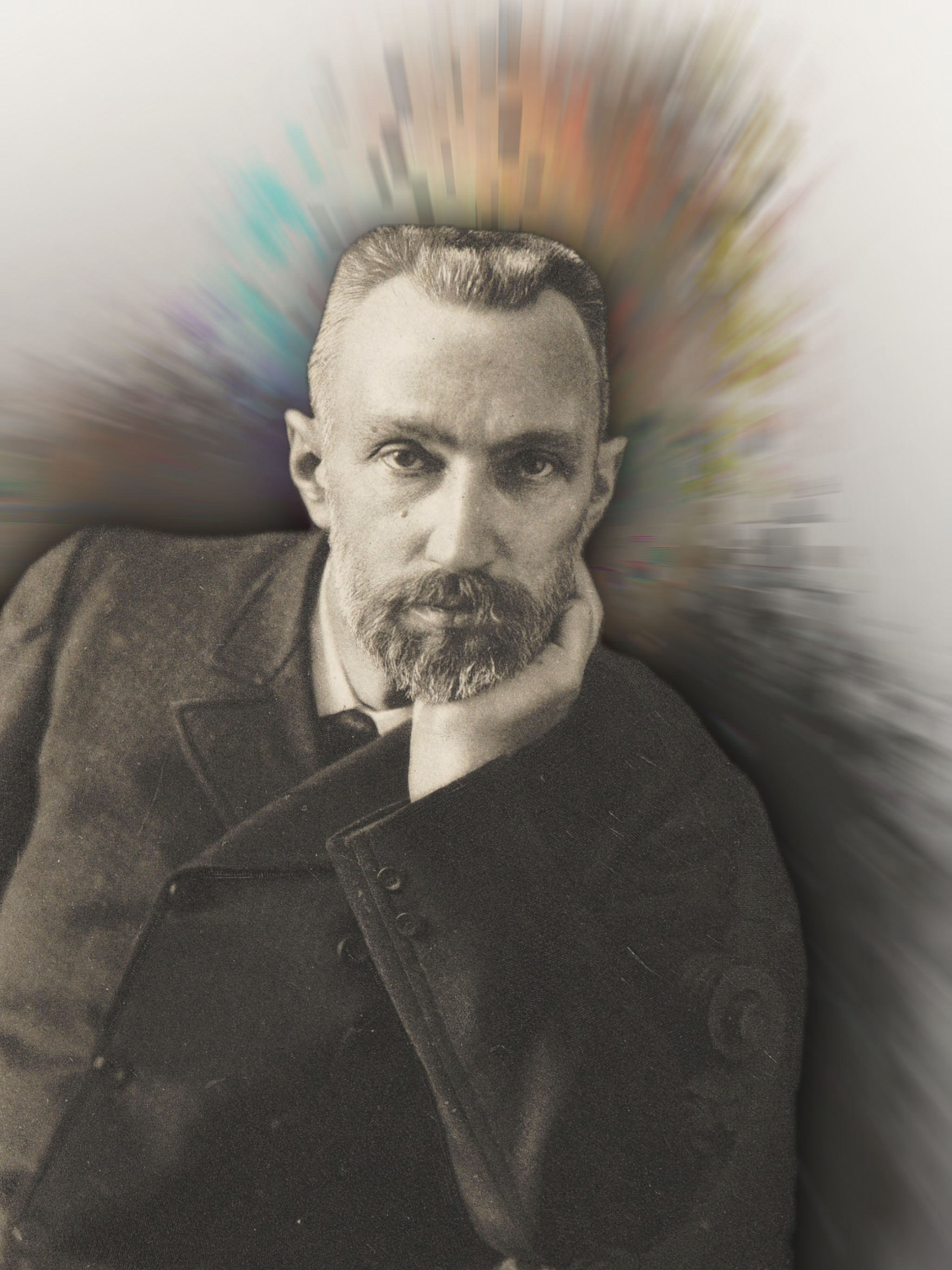
Pierre Curie, fils du docteur Curie, est né à Paris le 15 mai 1859 ; il fut élevé avec son frère Jacques, qui resta toujours son meilleur ami et fut son compagnon de travail pendant de longues années. Il ne suivit pas l’enseignement du lycée, mais, après avoir pris des leçons particulières, il passa son baccalauréat et continua ses études à la Faculté des sciences, où il n’eut pas de peine à obtenir, à dix-huit ans, le grade de licencié. Le niveau de cet examen était d’ailleurs relativement peu élevé à cette époque, et c’est par son effort personnel que Pierre Curie acquit ensuite sa grande culture générale et son habileté d’expérimentateur. Dans sa première jeunesse déjà, il avait appris à s’intéresser aux études expérimentales auprès de son père, qui avait un goût très vif pour les sciences naturelles et s’occupait fréquemment d’expériences dans ce domaine. Dès l’âge de quinze ans il se familiarisa avec la vie de laboratoire en venant souvent à l’École de pharmacie, où son frère était préparateur, et en prenant part à la préparation des cours de physique et de chimie. Le travail de laboratoire ne lui était donc point étranger lorsque, venant de passer sa licence, il fut nommé à la Sorbonne préparateur du professeur Desains. En même temps commença sa production scientifique.
Pierre Curie, son of Dr. Curie, was born in Paris on May 15, 1850; he was raised alongside his brother Jacques, who remained his closest friend and worked alongside him for many years. He did not attend high school, but after taking private lessons, he passed his baccalaureate and continued his studies at the Faculty of Sciences, where he had no difficulty obtaining his bachelor’s degree at the age of eighteen. The standard of this exam was, moreover, relatively low at that time, and it was through his own personal effort that Pierre Curie subsequently acquired his broad education and his skill as an experimenter. Even in his early youth, he had learned to take an interest in experimental studies alongside his father, who had a keen interest in the natural sciences and frequently conducted experiments in that field. From the age of fifteen, he became familiar with laboratory life by often visiting the School of Pharmacy, where his brother was a laboratory assistant, and by taking part in the preparation of physics and chemistry courses. Laboratory work was therefore by no means foreign to him when, having just earned his bachelor’s degree, he was appointed laboratory assistant to Professor Desains at the Sorbonne. At the same time, his scientific work began.
Cinq ans après, il entra comme chef des travaux de physique à l'École de Physique et de Chimie Industrielles qui venait d’être fondée, et pendant douze années il conserva la même situation. Ce n’est que en 1890, alors que ses travaux l’avaient déjà fait connaître et apprécier depuis longtemps, qu’il devint professeur à cette École, où une chaire nouvelle venait d’être fondée pour lui. C’est à cette époque aussi qu’il fut reçu docteur et qu’eut lieu notre mariage ; j’obtins l’autorisation de travailler avec lui à l’École. Depuis l’année 1900 il était chargé de cours à la Faculté des Sciences de Paris (enseignement du P. C. N.), lorsqu’en 1904, après l’attribution du prix Nobel pour la découverte du radium, une chaire fut créée pour lui à la même Faculté ; en même temps il quitta avec regret l’École de Physique où il avait passé plus de vingt années de travail ininterrompu. Il fut nommé membre de l’Institut en 1900. Le 19 avril 1906, alors qu’il n’avait pas encore quarante-sept ans, un accident tragique mit un terme à sa vie. (1)
(1) Une belle image de la vie de Pierce Curie a ete donnee par M. Langevin dans la Revue du Mois du 10 juillet 1906 (t. 11, p. 5).
Five years later, he was appointed head of the physics department at the newly founded School of Industrial Physics and Chemistry, a position he held for twelve years. It was not until 1890, when his work had already long since made him known and respected, that he became a professor at that School, where a new chair had just been established for him. It was also at that time that he received his doctorate and that our marriage took place; I obtained permission to work with him at the School. From 1900 onward, he was a lecturer at the Faculty of Sciences in Paris (teaching the P.C.N.), when in 1904, following the awarding of the Nobel Prize for the discovery of radium, a chair was created for him at the same Faculty; at the same time, he left with regret the School of Physics where he had spent more than twenty years of uninterrupted work. He was elected a member of the Institute in 1900. On April 19, 1906, while he was not yet forty-seven years old, a tragic accident brought his life to an end (1).
(1) A fine portrait of Pierre Curie’s life was provided by M. Langevin in the Revue du Mois of July 10, 1906 (vol. 11, p. 5).
Pierre Curie eut tou jours des moyens de travail tres restreints, et en realite on peut dire qu’il n’eut jamais un laboratoire convenable a sa disposition complete. Chef des travauxal’Ecole de Physique, il pouvait utiliser pour ses recherches, dans la mesure oil les besoins du service le permettaient, les ressources du laboratoire d’enseignement ou il dirigeait les manipulations; il a souvent exprime sa reconnaissance pour la liberte qui lui a ete laissee a ce sujet. Mais dans ce labora¬ toire d’eleves aucune salle ne lui etait destinee specialement ; Templacement qui lui servait le plus souvent d’abri etait un passage exigu compris entre un escalier et une salle de mani¬ pulations ; c’est la qu’il fit tout son long travail sur le magnetisme. Plus tard il obtint hautorisation d’utiliser un atelier vitre, situe au rez-de-chaussee de l’Ecole et servant de magasin et de salle de machines ; c est dans cet atelier que furent commencees nos recherches sur la radioactivite. Nous ne pouvions songer a y effectuer des traitements chimiques sans deteriorer les appareils ; ces traitements ont ete organises dans un hangar abandonne situe en face de l’atelier, et ayant abrite autrefois Installation provisoire des travaux pratiques de l’Ecole de Medecine. Dans ce hangar au sol bitume, dout le toit vitre nous abritait incompietement contre la pluie, qui faisait serre en ete et qu’un poele en fonte cbauffait bien mal en hiver, nous avons passe les meilleures et les plus heureuses annees de notre existence, consacrant au travail nos journees entieres. Depourvus de tous les amenagements qui facilitent le travail du chimiste, nous y avons effectue avec beaucoup de peine un grand nombre de traitements sur des quantites croissantes de matiere. Quand le traitement ne pouvait se faire dehors, les fenetres ouvertes laissaient echapper les vapeurs nuisibles. Tout le materiel se composait de vieilles tables de sapin usees, sur lesquelles je disposals mes precieux fractionnements de concentration du radium. N’ayant aucun meuble pour y enfermer les produits radiants obtenus, nous les placions sur les tables ou sur des planches, et je me souviens du ravissement que nous eprouvions, lorsqu’il nous arrivait d’entrer la nuit dans notre domaine et que nous apercevions de tous les cotes les silhouettes faibiement lumineuses des produits de notre travail.
Pierre Curie always had very limited resources at his disposal, and in fact it could be said that he never had a proper laboratory entirely at his disposal. As head of research at the School of Physics, he was able to use the resources of the teaching laboratory—where he supervised practical demonstrations—for his own research, to the extent that departmental needs permitted; he often expressed his gratitude for the freedom he was granted in this regard. But in this student laboratory, no room was specifically designated for him; the space that most often served as his refuge was a cramped passageway between a staircase and a laboratory; it was there that he carried out all his extensive work on magnetism. Later, he obtained permission to use a glass workshop, located on the ground floor of the School and serving as a storage room and machine shop; it was in this workshop that our research on radioactivity began. We couldn’t even consider performing chemical treatments there without damaging the equipment; these treatments were carried out in an abandoned hangar located across from the workshop, which had once housed the temporary practical training facility of the School of Medicine. In this shed with an asphalt floor, where the glass roof offered only incomplete shelter from the rain—making it sweltering in summer and barely heated by a cast-iron stove in winter—we spent the best and happiest years of our lives, devoting our entire days to our work. Devoid of all the amenities that facilitate a chemist’s work, we carried out there, with great difficulty, a large number of treatments on increasing quantities of material. When the treatment could not be done outdoors, the open windows allowed the harmful vapors to escape. All our equipment consisted of old, worn-out pine tables, on which I laid out my precious fractions of radium concentrate. Having no furniture in which to store the radioactive products we obtained, we placed them on the tables or on planks, and I remember the delight we felt when we would enter our domain at night and see, on all sides, the faintly glowing silhouettes of the products of our work.
Après sa nomination en tant que professeur à la Faculté des Sciences de Paris, Pierre Curie obtint, non sans beaucoup de peine, dans le service du P.C.N., un petit laboratoire provisoire composé de quelques pièces. Il ne put en réalité en profiter, ayant à préparer son nouvel enseignement, et ne vint y travailler régulièrement qu’après avoir achevé son cours du premier semestre 1905-1906 — le dernier mois de sa vie.
Les ressources matérielles dont il disposa pour ses travaux pendant la presque totalité de sa carrière scientifique furent également très restreintes. Il n’eut un crédit de laboratoire suffisant qu’après sa nomination de professeur à la Sorbonne. Nos recherches si coûteuses, relatives à la découverte du radium, ont été menées à bien grâce à une subvention de l’Institut et à des dons privés.
After his appointment as a professor at the Faculty of Sciences in Paris, Pierre Curie managed, with great difficulty, to secure a small temporary laboratory consisting of just a few rooms within the P.C.N. In reality, he was unable to make much use of it, as he had to prepare his new course, and did not begin working there regularly until after completing his course for the first semester of 1905–1906—the last month of his life.
The material resources available to him for his work during almost his entire scientific career were also very limited. He did not have sufficient laboratory funding until after his appointment as a professor at the Sorbonne. Our costly research related to the discovery of radium was successfully carried out thanks to a grant from the Institute and private donations.
Et cependant cet homme, qui s’est toujours montré indifférent aux conditions matérielles de la vie et totalement dépourvu d’exigences personnelles, désirait avoir un laboratoire bien installé, un abri tranquille et favorablement disposé pour sa vie laborieuse. C’était un de ses rêves qui ne devait jamais s’accomplir. Il s’en préoccupait et y pensait souvent. On sait qu’il ne voulut point accepter d’être décoré ; à l’époque où cette proposition lui a été faite, il crut utile d’appeler l’attention sur l’objet de son désir, et dans une lettre qu’il écrivit pour décliner la distinction qu’on lui offrait, il s’exprimait en ces termes : « Je n’éprouve pas du tout le désir d’être décoré, mais j’ai le plus grand besoin d’avoir un laboratoire. » Il était, hélas ! plus facile de lui offrir ce dont il se désintéressait que ce qui l’aurait rendu heureux.
And yet this man, who had always shown indifference to the material conditions of life and was entirely devoid of personal demands, longed for a well-equipped laboratory, a quiet and comfortably furnished retreat for his laborious life. It was one of his dreams that was never to come true. He worried about it and thought of it often. It is known that he did not wish to accept an award; at the time this proposal was made to him, he thought it useful to draw attention to the object of his desire, and in a letter he wrote to decline the distinction offered to him, he expressed himself in these terms: “I have no desire whatsoever to be decorated, but I have the greatest need for a laboratory.” Alas, it was easier to offer him what he had no interest in than what would have made him happy.
Pierre Curie fut un de ces hommes qui ont fait de leur œuvre le but principal de leur activité et la préoccupation dominante de leur vie. Déjà épris de la recherche scientifique alors qu’il n’était presque qu’un enfant, il lui voua l’effort persévérant et le labeur incessant de sa trop courte existence, lui sacrifiant toute distraction, toute relation mondaine, le repos même de ses vacances. Ainsi sa vie resta toujours en accord avec l’idéal de sa jeunesse, et, conformément à la pensée de ses vingt ans, exprimée dans des pages écrites par lui à cette époque, il réussit à « faire de la vie un rêve, et faire d’un rêve une réalité ».
Grave et silencieux, il vivait volontiers avec ses pensées et ne pouvait supporter l’agitation extérieure. En dehors de son travail, il aimait surtout les excursions dans la campagne ; extrêmement sensible à sa beauté, il en connaissait parfaitement tous les aspects et en subissait le charme tranquille et vivant. Dans les environs de Paris, dont il aimait la douce variété, aucun coin ne lui était inconnu ; il savait quelles plantes et quelles fleurs on y trouve à diverses époques, et ce qui vit dans les herbes et les taillis, dans les ruisseaux et dans les mares. Plus d’une idée a germé et mûri, plus d’un projet de travail est né dans ces courses vagabondes où il lui arrivait souvent d’oublier l’heure en s’attardant dans ses rêves.
Pierre Curie was one of those men who made their work the primary focus of their activity and the dominant preoccupation of their lives. Already captivated by scientific research when he was little more than a child, he devoted to it the steadfast effort and ceaseless labor of his all-too-short life, sacrificing every distraction, every social engagement, and even the rest he might have found during his vacations. Thus his life always remained in harmony with the ideal of his youth, and, in accordance with the thoughts he had at twenty, expressed in pages he wrote at that time, he succeeded in “making life a dream, and making a dream a reality.”
Serious and silent, he was content to live with his thoughts and could not bear external commotion. Outside of his work, he especially loved excursions into the countryside; extremely sensitive to its beauty, he knew all its aspects perfectly and was captivated by its tranquil yet vibrant charm. In the countryside around Paris, where he loved the gentle variety, no corner was unknown to him; he knew which plants and flowers could be found there at various times of the year, and what lived in the grasses and thickets, in the streams and in the ponds. More than one idea took root and matured, more than one work project was born during these wandering excursions, where he often lost track of time as he lingered in his dreams.
De caractère éminemment droit, loyal envers lui-même et envers les autres, il s’efforçait en toute circonstance de conformer ses actes à ses opinions. Il était convaincu que la conduite qui consiste à être toujours d’accord avec un idéal moral élevé, en écartant tout compromis et toute diplomatie compliquée, est précisément la conduite la plus raisonnable et la plus utile au point de vue social. Il lui a souvent fallu un réel courage pour se maintenir au niveau de cette conception. Toutefois sa fermeté presque intransigeante ne devenait jamais blessante ; elle s’alliait par une association rare à une grande douceur de caractère ; il ne s’y mêlait ni âpreté ni amour-propre, et tout froissement était ainsi exclu. Ce fonds de douceur joint à une grande bienveillance lui assurait la sympathie de ceux qui avaient l’occasion de l’approcher et l’affection de ceux qui se trouvaient souvent en rapport avec lui. Il était toutefois très réservé de nature, et sa vie intérieure n’était accessible qu’à ceux qu’il aimait.
A man of eminently upright character, loyal to himself and to others, he strove in all circumstances to ensure that his actions were consistent with his convictions. He was convinced that the conduct of always adhering to a high moral ideal—rejecting all compromise and complicated diplomacy—is precisely the most reasonable and socially beneficial course of action. It often took real courage for him to live up to this standard. Yet his almost uncompromising firmness never became hurtful; it was combined, in a rare combination, with great gentleness of character; there was neither harshness nor self-importance in it, and any offense was thus precluded. This underlying gentleness, combined with great kindness, earned him the sympathy of those who had the opportunity to approach him and the affection of those who were often in contact with him. He was, however, very reserved by nature, and his inner life was accessible only to those he loved.
La production scientifique était pour Pierre Curie un besoin, et la conception qu’il en avait était particulièrement pure et élevée. Il ne venait s’y mêler aucune préoccupation étrangère, de carrière, de succès, ni même d’honneur et de gloire. Il était dominé par le besoin de réfléchir à un problème, d’en poursuivre la solution sans épargner ni son temps ni sa peine, de la voir peu à peu se dégager et se préciser, et d’aboutir enfin à un ensemble de résultats certains, constituant un progrès réel dans la connaissance de la question. Bien que constamment préoccupé d’idées scientifiques d’intérêt général, il apportait à l'exécution de chaque travail le même soin consciencieux, ne jugeant aucun détail pratique indigne de son effort, n’ayant jamais pour but l’éclat du résultat ni l’effet à produire.
For Pierre Curie, scientific work was a necessity, and his conception of it was particularly pure and lofty. It was untainted by any extraneous concerns—neither career, success, nor even honor and glory. He was driven by the need to reflect on a problem, to pursue its solution without sparing either his time or his effort, to see it gradually emerge and take shape, and to finally arrive at a set of certain results constituting real progress in the understanding of the issue. Although constantly preoccupied with scientific ideas of general interest, he applied the same conscientious care to the execution of every task, considering no practical detail unworthy of his effort, and never aiming for the brilliance of the result or the effect it might produce.
Ne se souciant en aucune façon de tirer parti de ses travaux pour obtenir des avantages matériels ou des satisfactions d’amour-propre, il considérait toute publication comme la consécration logique d’un résultat obtenu, la communication d'un ensemble de faits ou d’idées clairement compris et reliés. Il ne se laissait jamais entraîner à des publications hâtives destinées à prendre date, car il disait et pensait sincèrement que la qualité du travail importe plus que le nom de l’auteur. Quand on lui parlait de questions de ce genre, il répondait tranquillement : « Qu’importe que je n'aie pas publié tel travail, si un autre le publie. » Bien des expériences sur lesquelles il ne s’était pas formé une opinion suffisamment claire pour le satisfaire n’ont jamais été décrites, et il lui arrivait de s’occuper d'une question pendant longtemps, non sans résultats intéressants, et de ne rien publier à ce sujet.
Unconcerned in the least with using his work to gain material benefits or satisfy his ego, he viewed every publication as the logical culmination of a result achieved, the communication of a set of clearly understood and interconnected facts or ideas. He never allowed himself to be drawn into hasty publications intended merely to be up-to-date, for he sincerely believed and stated that the quality of the work matters more than the author’s name. When people spoke to him about such matters, he would calmly reply: “What does it matter that I haven’t published such-and-such a work, if someone else publishes it?” ” Many experiments on which he had not formed a sufficiently clear opinion to satisfy him were never described, and it happened that he would work on a question for a long time, not without interesting results, and yet never publish anything on the subject.
Aussi, dans le champ très vaste des problèmes qui l’intéressaient, aimait-il à choisir ceux vers lesquels ne se portait pas l'attention de nombreux chercheurs et dont il pouvait s’occuper en paix et sans précipitation. Après la découverte du radium et quand l'étude de la radioactivité eut été abordée par beaucoup de savants, Pierre Curie s’accommodait mal de la production fiévreuse et de la rapidité des publications. Il était souvent tenté d’abandonner, pour quelque temps, ce sujet, où son œuvre avait cependant été si prépondérante, et de se réfugier dans des régions de la science plus calmes et plus propices à la réflexion mûrie. Il désirait surtout reprendre ses études relatives à la symétrie des milieux cristallisés.
Moreover, within the vast field of problems that interested him, he liked to choose those that had not attracted the attention of many researchers and that he could study in peace and without haste. After the discovery of radium and once the study of radioactivity had been taken up by many scholars, Pierre Curie found it difficult to cope with the feverish pace and rapid succession of publications. He was often tempted to set aside for a time this subject in which his work had nevertheless been so dominant, and to take refuge in areas of science that were calmer and more conducive to mature reflection. Above all, he wished to resume his studies on the symmetry of crystalline media.